
How a High-Performance Website Doubles Local Leads in Melbourne
Lead Generation Briefing
- 01 Speed = Revenue: Every additional second of load time reduces conversions by 7%. A site loading in 1.5 seconds converts 3x better than one loading in 5 seconds.
- 02 Local SEO Dominance: Businesses with optimised, fast websites and proper structured data appear in the Google Map Pack — capturing 44% of all local search clicks.
- 03 Mobile-First or Invisible: 76% of local searches on mobile result in a visit or call within 24 hours — but only if your site loads instantly on 4G.
- 04 Conversion Architecture: Strategic placement of CTAs, trust signals, and contact methods can transform a passive brochure site into an active lead-generating machine.
In highly competitive markets like Melbourne and Geelong, simply "having a website" is no longer enough. Your competitors are investing in high-performance digital experiences that actively capture, engage, and convert local traffic into paying clients. The question isn't whether you need a website — it's whether your website is actually working for you, or just sitting there like an expensive digital business card nobody reads.
At Alltechzone, we've spent years studying what separates websites that generate 3–5 leads per day from those that generate 3–5 leads per month. And we can tell you right now: it's not about having fancier graphics or more pages. It's about performance, architecture, and conversion psychology. Let us show you exactly how it works.

1. Speed is the Ultimate Currency
Let's start with the most fundamental truth in web development: speed kills — your competitors, that is. Google has published extensive data showing that 53% of mobile site visitors will leave a page that takes longer than three seconds to load. Three seconds. That's it. If your website is sluggish, you're losing more than half your potential customers before they even see your homepage.
But here's what most people miss: speed isn't just about user experience. It's a direct Google ranking factor. Google's Core Web Vitals — Largest Contentful Paint (LCP), Interaction to Next Paint (INP), and Cumulative Layout Shift (CLS) — are now baked into the search algorithm. If your site fails these metrics, Google actively pushes you down in search results, regardless of how good your content is.
Here's what a high-performance site looks like under the hood:
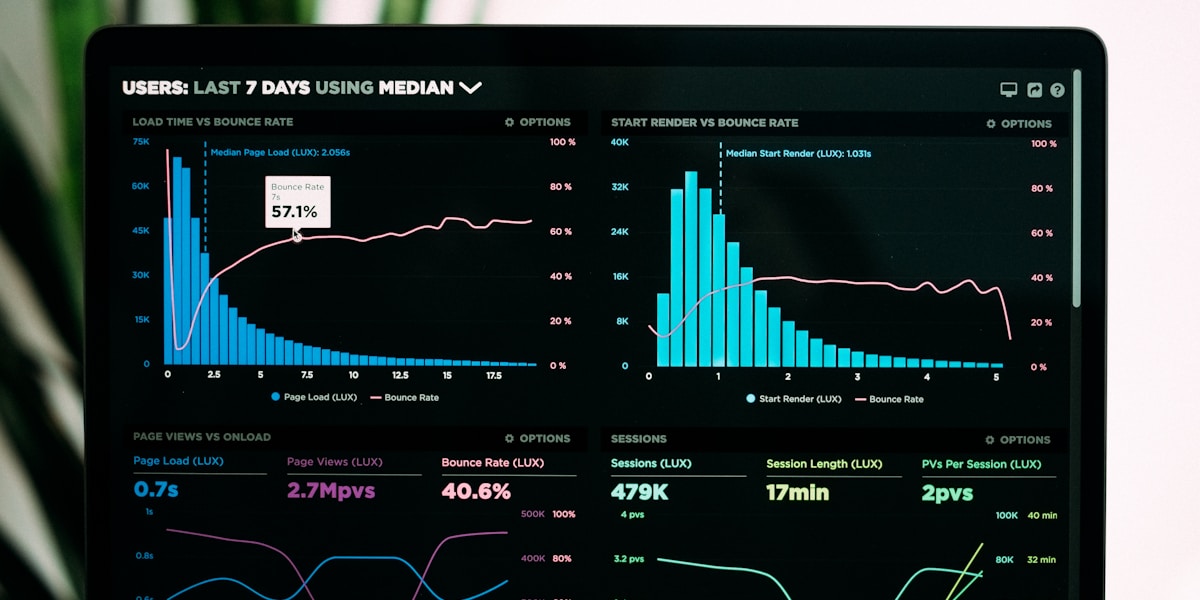
| Metric | Average Site | Alltechzone Site |
|---|---|---|
| First Contentful Paint | 3.2 seconds | 0.8 seconds |
| Largest Contentful Paint | 4.5 seconds | 1.2 seconds |
| Time to Interactive | 5.1 seconds | 1.5 seconds |
| PageSpeed Score (Mobile) | 45/100 | 92/100 |
| Bounce Rate | 55–70% | 25–35% |
We achieve this through a combination of modern frameworks (React with prerendering), optimised WebP images, edge-cached hosting, code splitting, and lazy loading. It sounds technical, but the result is simple: your site loads faster than your competitors', and Google rewards you for it.
2. Local SEO: Be Found Where It Matters
Getting found by locals in Melbourne or Geelong requires more than just "having good content." It requires structural local SEO — a systematic approach to telling Google exactly who you are, what you do, and where you do it.
There are three places where local businesses appear in Google search results:
44%
of local clicks go to the Google Map Pack (top 3 results with the map)
29%
go to the first organic result below the map
8%
go to the second organic result — after that, traffic drops sharply
To dominate these positions, your website needs:
- Structured data (Schema markup): JSON-LD code that explicitly tells Google your business name, address, phone number, services, reviews, and operating hours. Without this, Google is guessing — and it often guesses wrong.
- Dedicated location pages: If you serve multiple suburbs, each suburb needs its own page with unique content, a unique H1 tag, and a unique meta description. A single "Areas We Serve" page with a bullet list doesn't cut it.
- NAP consistency: Your Name, Address, and Phone number must be identical everywhere — your website, Google Business Profile, Facebook, Yellow Pages, and every directory listing.
- Google Business Profile optimisation: Your website and your GBP should be tightly linked, with consistent information, regular posts, and review management.
Case Study: Plumber in Point Cook
We built a high-performance website for a plumbing business in Point Cook with dedicated pages for 8 surrounding suburbs (Werribee, Tarneit, Williams Landing, Hoppers Crossing, Truganina, Laverton, Altona, and Wyndham Vale). Within 75 days, they were appearing in the Google Map Pack for 12 different local search terms and their monthly enquiries increased from 8 to 34. That's a 325% increase — from the website alone, no ads.
3. Conversion Architecture: Turning Visitors into Leads
This is where most business websites completely drop the ball. They get traffic — maybe even decent traffic — but they don't convert it. The visitors come, look around for a few seconds, and leave without calling, emailing, or booking. The business owner thinks "SEO doesn't work" when the real problem is their website has no conversion architecture.
Conversion architecture is the strategic placement of elements that psychologically guide visitors toward taking action. Here's what it looks like in practice:
- ✓ Hero CTA above the fold: Within 2 seconds of landing, visitors should see a clear call to action — "Get a Free Quote," "Book Now," or "Call Us Today."
- ✓ Sticky phone/WhatsApp button: A floating call button that follows the user as they scroll, always within thumb's reach on mobile.
- ✓ Social proof near CTAs: Place your star rating and review count directly next to your booking button. "Rated 5/5 from 127 reviews" next to "Book Now" is incredibly powerful.
- ✓ Multiple contact methods: Phone, WhatsApp, contact form, and online booking — different customers prefer different channels. Offer all of them.
- ✓ Urgency triggers: "Limited availability this week" or "Same-day response guaranteed" create motivation to act now rather than later.
4. The Mobile-First Imperative
We've mentioned mobile speed, but the mobile experience goes deeper than just load time. Here's a stat that should reshape how you think about your website: 76% of people who search for something local on their phone visit a business or make a call within 24 hours. These are hot leads — people with their wallets out, ready to buy.
But they're on a 6-inch screen, using their thumb, possibly standing in the rain or sitting in traffic. Your website needs to work perfectly in that context. That means:
- Buttons large enough to tap without zooming
- Text readable without pinching
- Forms that auto-fill and use the right keyboard (email keyboard for email fields, phone keyboard for phone fields)
- No horizontal scrolling, ever
- Images that don't push content around as they load (no layout shift)
Google now uses mobile-first indexing, meaning it primarily looks at the mobile version of your site when deciding rankings. If your desktop site looks great but your mobile experience is mediocre, your rankings will reflect the mediocre version.
5. Content That Converts (Not Just Informs)
The final piece of the puzzle is content strategy. Most business websites fall into one of two traps: either they have barely any content (just a homepage and a contact page), or they have generic, uninspiring content that reads like it was written by a robot.
High-performing content follows a simple formula:
- Address the customer's problem first. Don't start with "Welcome to our website!" Start with "Is your [specific problem]? We fix it same-day."
- Be specific about your location. "We serve all of Melbourne" is weak. "Proudly serving Berwick, Narre Warren, Pakenham, and the Casey region" is powerful — both for humans and for Google.
- Include pricing indicators. You don't need exact prices, but "Starting from $399" or "Free quotes" removes the biggest barrier to enquiry: price uncertainty.
- Use customer language. Don't say "We provide comprehensive plumbing solutions." Say "We fix blocked drains, leaking taps, and broken hot water systems."
Frequently Asked Questions
How quickly will I see results from a high-performance website?
Most of our clients see measurable improvements within 30–60 days. Local SEO rankings typically start climbing within 2–3 months, and lead volume increases steadily as Google indexes your optimised pages and structured data.
Can a new website really double my leads?
Yes, and we've seen it happen repeatedly. When you combine fast load speeds, proper local SEO, conversion-focused design, and mobile optimisation, the compounding effect is dramatic. Several of our Melbourne clients have seen 3–4x increases in monthly enquiries after launching their Alltechzone sites.
What if I already have a website but it's not generating leads?
That's actually our most common scenario. We offer a free website audit that identifies exactly why your current site isn't converting — whether it's speed issues, poor mobile experience, missing SEO elements, or weak conversion architecture. From there, we can either optimise your existing site or build you a new one.
Stop Treating Your Website Like a Brochure
Your website shouldn't be something you set up once and forget about. It should be your hardest-working employee — generating leads 24/7, ranking in local search, answering common questions, building trust, and converting visitors into customers while you sleep.
The difference between a website that generates 3 leads per month and one that generates 3 leads per day isn't luck. It's architecture, speed, local SEO, and conversion optimisation. And at Alltechzone, we build all of that into every site we deliver — starting from just $399.
Stop Losing Leads to Your Competitors
Let's audit your current website and find exactly where you're losing money. Free, no obligation, just actionable insights.
Get Your Free Lead Generation AuditWritten by Senior Strategist
Expert contributor at Alltechzone. Passionate about exploring the intersection of technology, design, and business strategy. Helping companies navigate the digital landscape of 2026.
Read Next
View All
The Agentic Web: Is Your Website Ready for AI Users?
Humans aren't the only ones visiting your site anymore. In 2026, optimizing for AI Agents (AIO) is the key to survival.

The Future of Web Development: 2026 Trends You Can't Ignore
From AI-driven interfaces to hyper-personalized experiences, discover the technologies shaping the digital landscape in 2026.
Ready to Scale Your Business?
Contact us for a free consultation. Let's discuss your vision and see how we can help you generate more leads and dominate your local market.